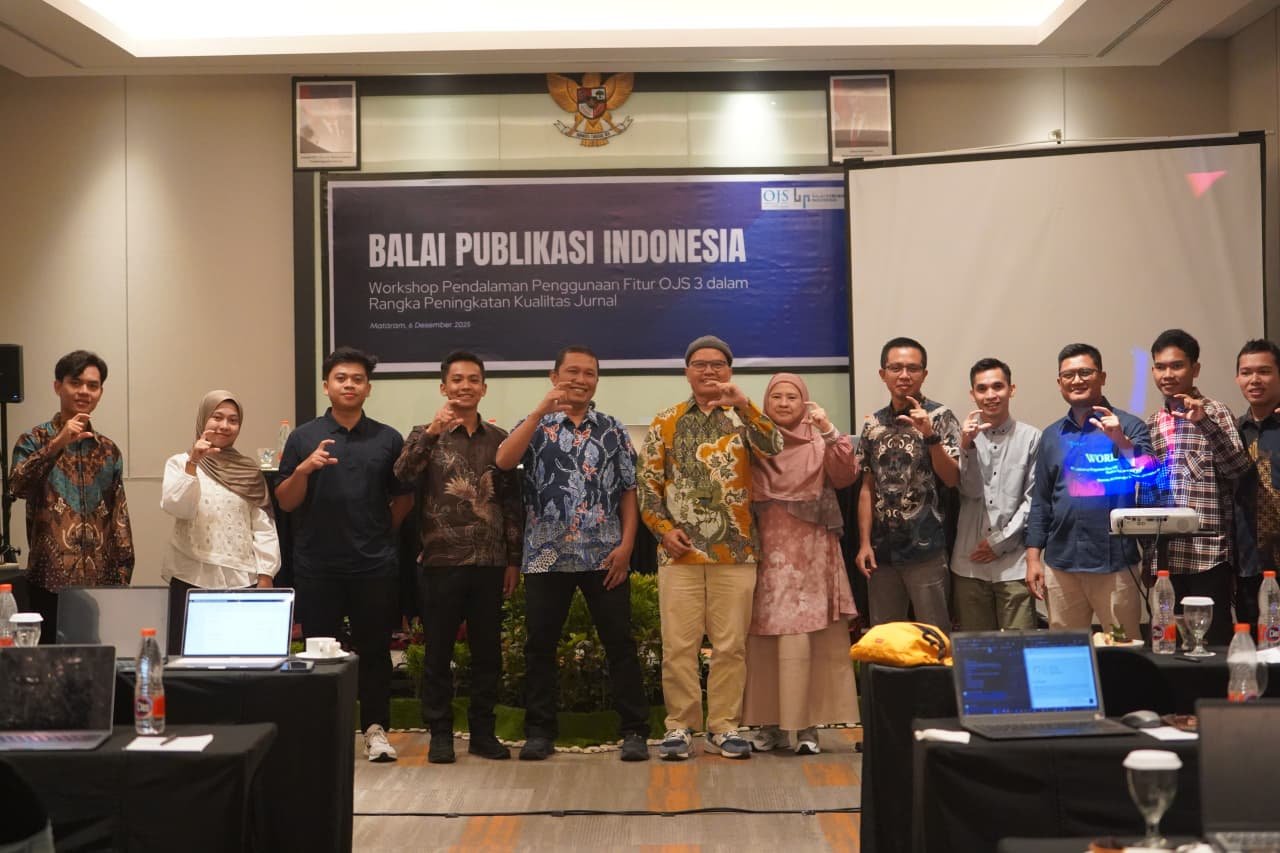
Strategic move to strengthen the national scientific publication ecosystem, Balai Publikasi Indonesia (BPI) successfully convened an Advanced Workshop on Open Journal Systems (OJS) 3 Features. Held at the Prime Park Hotel, Lombok, the event marked a pivotal moment for journal managers within the BPI network to undergo a comprehensive transformation in both technical and managerial journal governance.
Focus on Cutting-Edge Features and Standardization
The workshop was specifically designed to address the evolving needs of journal managers facing the rigors of national accreditation and global indexing. Key discussions centered on optimizing editorial workflows, advanced metadata management, and the implementation of security plugins to ensure data integrity within the latest OJS version.
“The quality of a journal is not solely judged by its content, but also by the professional execution of the underlying information systems and technical governance. Mastering OJS 3 features is the key to achieving that efficiency,” stated a representative from Balai Publikasi Indonesia during the opening remarks.
Expert Insights from Politeknik Negeri Jember
The event featured Afif Sugi Hendrianto, a prominent technical expert from Politeknik Negeri Jember, as the keynote speaker. In his technical sessions, Afif delved deep into several critical areas:
UI & UX Optimization: Ensuring responsive journal interfaces to enhance the experience for authors and reviewers alike.
Editorial Workflow Management: Systematizing editor assignments to significantly reduce “time to publication.”
System Security: Implementing robust protection strategies against hacking threats and emphasizing the importance of file integrity in safeguarding research data.
Indexing and Interoperability: Ensuring journal metadata is perfectly harvested by global indexing engines such as Google Scholar, DOAJ, and Scopus.
Highlighting System Integrity
One of the most impactful takeaways from the session was Afif’s emphasis on the technical backbone of digital publishing.
“OJS is more than just a platform to upload PDFs; it is the fortress of scientific integrity. If the system is unhealthy and its security is fragile, the very credibility of the journal is at stake,” Afif remarked, highlighting the non-negotiable nature of technical excellence.
Interactive Sessions and Future Outlook
The workshop transitioned from theory to practice as editors and managers engaged in hands-on simulations using their respective journal dashboards. The interactive atmosphere allowed participants to troubleshoot real-world technical hurdles, ranging from email notification failures to advanced custom theme configurations.
By the conclusion of the event, Balai Publikasi Indonesia set a clear target: elevating the SINTA accreditation status of all managed journals. The deep implementation of OJS 3 features is expected to foster a publication standard that is more credible, transparent, and globally competitive.
With the knowledge gained in Lombok, Indonesian journal managers are now better equipped to bring local research to the international stage.